How AI Reduces Admin Time for Small UK Recruitment Agencies
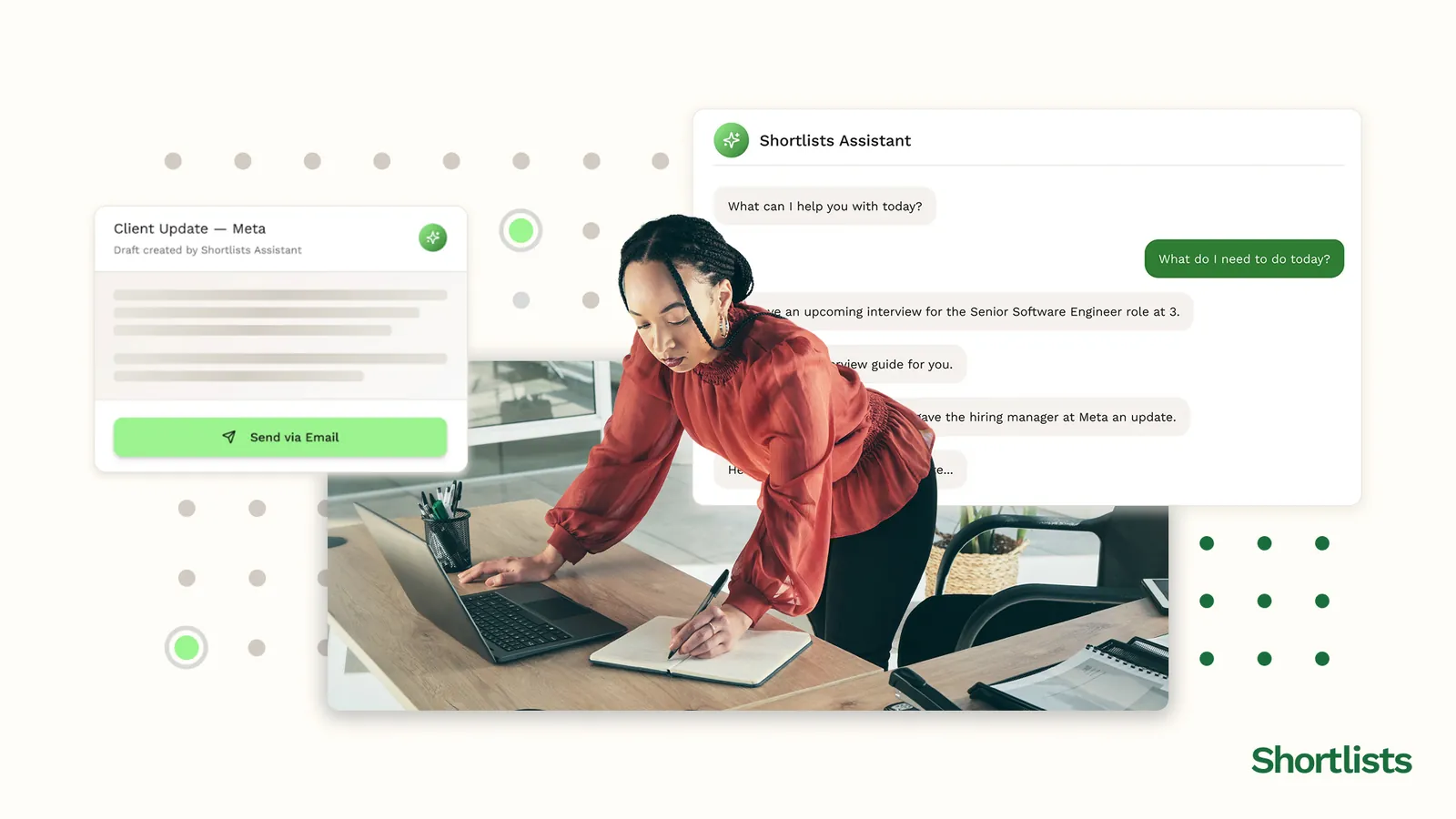
Recruitment automation helps small UK recruitment agencies reduce repetitive admin by using AI for tasks such as call notes, CRM updates, contact enrichment, outreach drafting and daily briefings. Rather than replacing recruiters, AI supports the administrative side of recruitment, giving consultants more time to focus on business development, candidate relationships and successful placements.
Key takeaways
- Recruitment automation uses AI to streamline repetitive recruitment tasks, not replace recruiters.
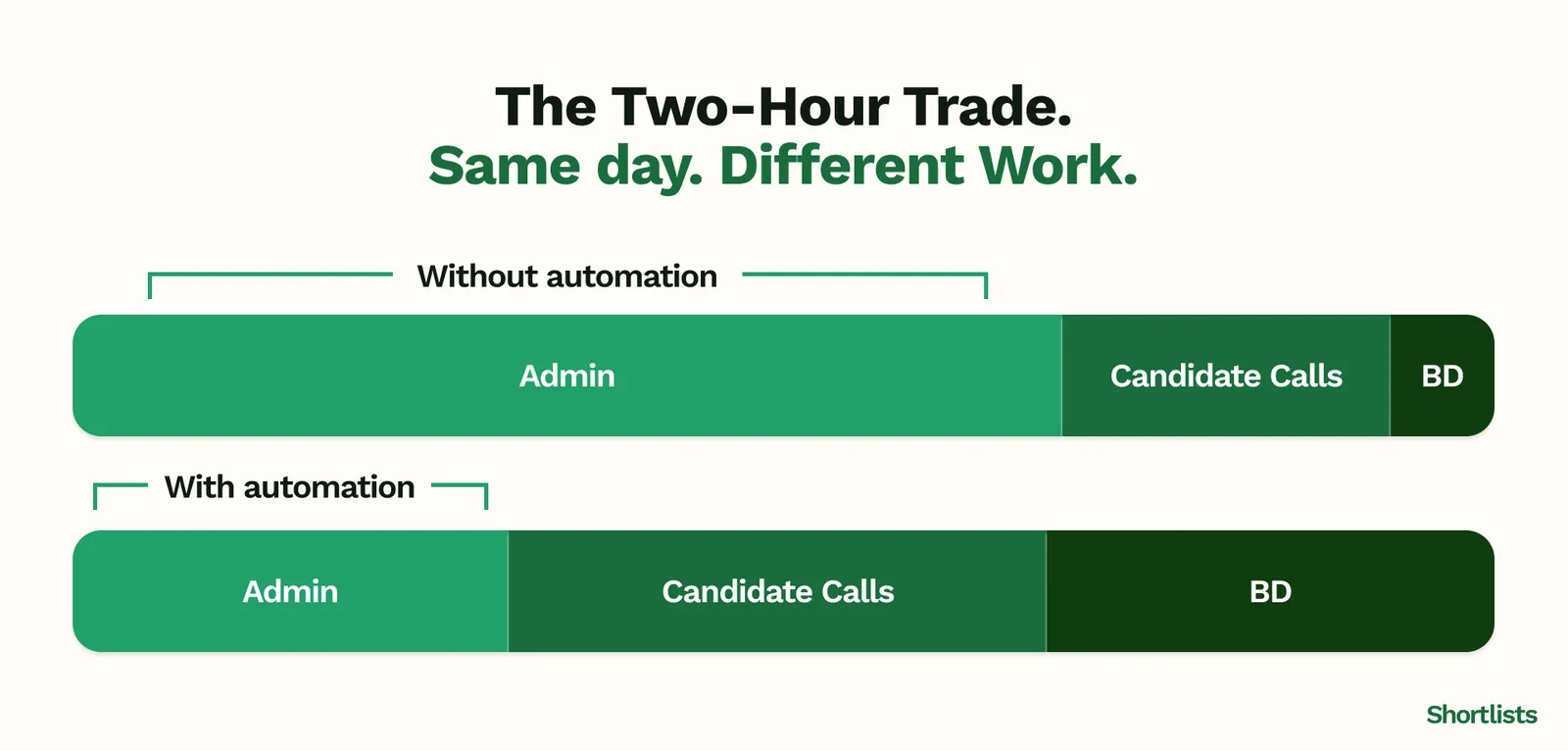
- Small agencies can save around two hours per recruiter per day by automating administrative work.
- AI performs best when handling call notes, follow-up emails, CRM updates, contact enrichment and daily planning.
- Relationship building, candidate assessment, client conversations and placement decisions remain human responsibilities.
- AI-powered call note tools can automatically capture conversations and generate follow-up drafts.
- Contact enrichment can automatically add email addresses, phone numbers and LinkedIn profiles from basic contact details.
The admin is eating the desk
You know the pattern. A solid call ends, and the next 20 minutes are yours except you spend them writing up notes, updating the CRM, drafting a follow-up email, and finding the hiring manager's direct email so you can actually send it.
Multiply that across five calls a day on a five-person desk. That is roughly ten hours of admin. Every single day.
Nobody became a recruiter to spend half their time typing. Recruiting is a craft — understanding what a founder actually needs in their next VP, knowing which candidate will thrive in that culture, holding the room when a counter-offer lands at 6pm. That craft is what earns the fee.
The admin does not. It just costs time.
What recruitment automation actually means right now
Let's be clear about something. "Recruitment automation" is not a single thing. It is a loose label for about six different software categories — from job-board posting tools to full AI notetakers — and they do very different jobs.
When a 3-to-10 seat UK agency asks whether to automate, the useful question is not "should we?" It is: which specific tasks should AI handle, and which ones should stay with the recruiter?
That distinction matters because AI is genuinely good at some things and genuinely bad at others. Confusing the two is the fastest way to spend money on tools that do not move the needle.
Five tasks AI handles well for a small UK agency
1. Call notes and follow-up drafts
The AI notetaker is the clearest win available right now. You join a call; it transcribes, pulls out the skills, salary, availability and key commitments, and drafts the follow-up before you hang up.
The call takes the same time. The two hours of CRM cleanup after it do not.
For a 3-to-10 seat agency running 10 to 15 calls a day across the team, this is the single highest-ROI automation to put in place first. It is also the easiest to demo to a sceptical team — they see the output on the first call and the argument is over.
2. Contact enrichment
You found a good candidate on LinkedIn. You have a name and a company. Finding their direct email and mobile used to mean a separate enrichment tool, a monthly credit pack, and an anxious check on whether the data is actually current.
AI enrichment built into your recruiting CRM fills the email, mobile and LinkedIn profile automatically. No separate tool. No additional bill. Add a name and company; get the details back. (See how contact enrichment works in Shortlists.)
3. Outreach personalisation at volume
Writing a personalised email to 80 candidates is, in practice, writing a template and hoping it reads personal. Which it does not.
AI drafting takes the candidate's profile, the role, and your preferred tone, and writes a version that actually references their background. You review it, adjust if needed, and send. Reply rates improve. So does the time it takes to run the campaign.
4. CRM hygiene
Stale records, duplicate contacts, activity logs nobody updated — this is the slow tax on every CRM in the industry. Your pipeline is only as useful as the data in it.
AI-assisted CRM tools flag duplicates on import, suggest record updates when new information arrives from email or a call, and auto-log activity from integrated inboxes. The pipeline stays clean without a Monday-morning cleanup session. (See the pipeline and CRM features.)
5. Your morning briefing
What is worth calling today? Which live roles are close to filling, and which have gone cold? Who last spoke to your top candidate for the TechFinance mandate?
A revenue dashboard with an AI briefing answers these before 9am — not via a 45-minute CRM trawl. One screen, ranked by what needs attention today. (See the revenue dashboard.)
What AI does not do well (and should not try)
Honest account, because this matters.
AI does not replace the judgment call on whether a candidate is actually right for a firm. It does not run the counter-offer conversation. It does not know whether a hiring manager you spoke to six months ago responds to a WhatsApp or needs a formal email.
Those decisions are the craft. They are also the reason placement fees exist.
Any tool that tells you AI handles the relationship is either misunderstanding what relationship-led recruitment is, or hoping you are.
The right frame: AI takes the admin so you have more time for the craft. Not the other way round.
The real automation gap: business development
Here is the admin task almost nobody talks about — and the one that costs small agencies the most in lost fees.
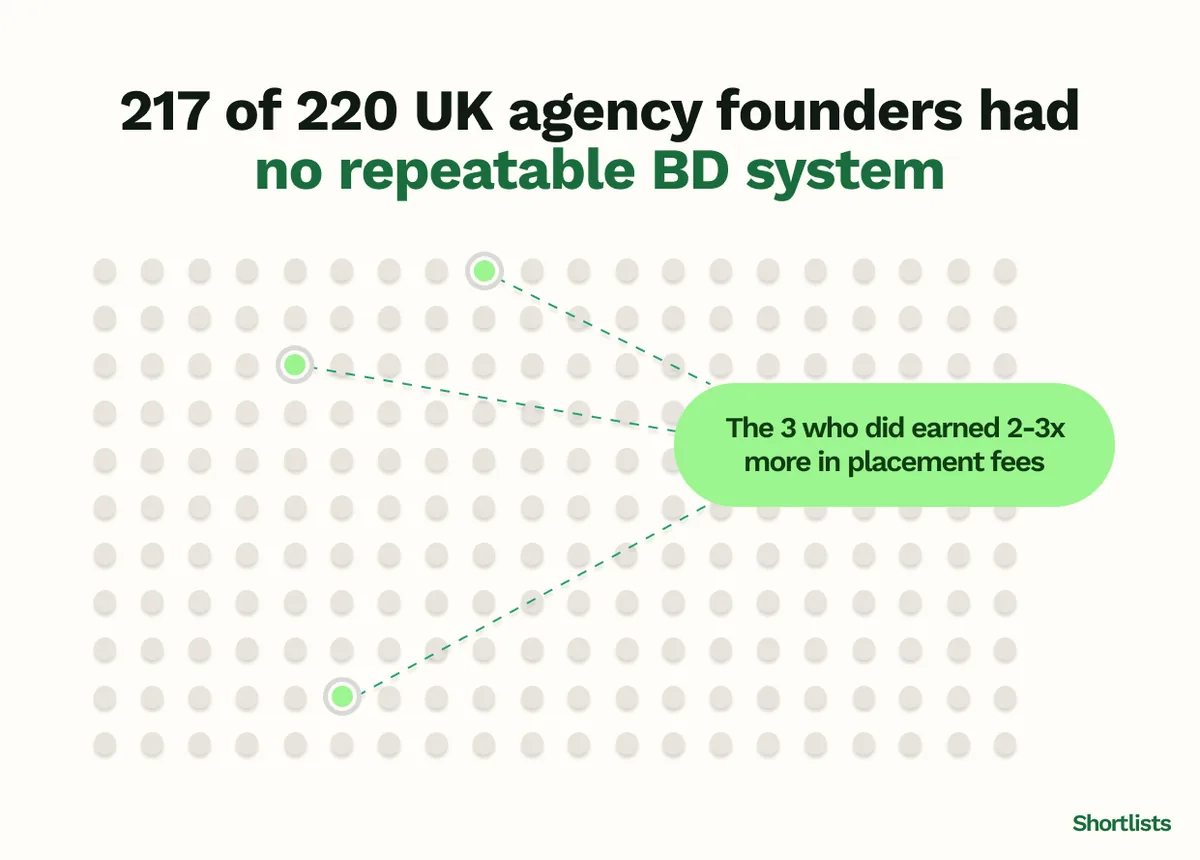
Of 220 UK agency founders Jack Nicoll interviewed before building Shortlists, 217 had no repeatable business development (BD) system. Three did — and those three earned 2 to 3 times more placement fees than the rest.
The agencies without a system were not lazy. They were reactive. By the time a role hit LinkedIn Jobs, 12 other recruiters had already seen it. They were pitching 13th into a shortlist that was already half-built.
Automation rarely features in the BD conversation, but it should. The signals that predict a role before it is posted are findable. They are just scattered across 15 different sources, and checking all of them manually at 8am is not how a three-to-ten seat agency operates.
Four pre-posting signals, and what they predict:
- Funding round closed. A closed funding round is a hiring signal: growth capital usually comes with a mandate to expand the team, and the senior, specialist roles that follow are exactly the ones a niche agency wants to be early on. Most are not posted yet, and the hiring manager is often taking calls from day one.
- VP-level hire announced. A new VP is a hiring signal in their own right: incoming leaders usually build their team early, while the roles are still being shaped rather than posted. That is when you want to be in the conversation.
- Senior leaver in your niche. A senior departure often opens a replacement or a restructure. Move in the week it happens and you are talking to the hiring manager before the role reaches a job board.
- Adjacent-role posting spike. A company posting several designers usually needs a design manager next. The pattern tends to show up before the manager role is listed, which is the window you want.
These signals are the difference between pitching 13th and pitching first. The automation question is not how to write the email — it is how to find the signal before anyone else does.
The frankenstack problem
Before getting to how this is solved, it is worth naming the structure that stops agencies from making any of it work properly.
The average 3-to-10 seat UK agency is running a recruiting CRM, a separate AI notetaker, an enrichment tool, an outreach tool, and some version of an AI assistant — tools that do not talk to each other, do not share data, and require logging into five different dashboards.
That stack runs $324 to $976 a month combined, according to Shortlists' internal stack analysis. It still does not include BD signal monitoring.
This is the frankenstack — a stitched-together set of tools, each doing one job, none doing it together. The automation exists in theory. The integration does not.
How Shortlists handles this
Shortlists is a recruiting CRM built from scratch for 3-to-10 seat UK agencies. It puts the five admin tasks above — notetaking, enrichment, outreach drafts, CRM hygiene, and morning briefings — into one tool, at the base price, with no add-on tax.
The AI notetaker joins calls and drafts follow-ups before the call ends. Contact enrichment fills emails, mobiles and LinkedIn profiles from a name and company. The AI co-pilot drafts outreach, role ads and client updates in your voice. The revenue dashboard gives you the morning briefing before the calls start.
BD Radar scans job boards, funding announcements, leadership changes and senior-leaver signals overnight, scores them against your candidate database, and hands you a ranked list of roles worth calling about by 8am, with the hiring manager's email drafted. That is the job Shortlists is built around: get to the hiring manager before the job is posted.
No annual contract. Free, fully managed migration. Most migrations take 2–3 weeks end to end. Migrating from another CRM? Talk to us first.
Frequently asked questions
What is recruitment automation?
Recruitment automation covers software that handles a repeatable recruiting task without manual input — notetaking, contact enrichment, outreach personalisation, CRM updates, and BD signal monitoring. The useful question is not whether to automate, but which tasks to automate and which to keep with the recruiter. Admin is a good candidate. Relationship calls are not.
Can AI handle the full recruitment process?
No. AI handles admin well: notes, enrichment, first-draft outreach, CRM hygiene, and morning briefings. It does not replace the judgment calls, the relationship management, or the counter-offer conversations that make up the craft. Any tool that claims otherwise is overselling what the technology actually does.
Is recruitment automation useful for a small agency?
Yes — especially for 3-to-10 seat agencies where every recruiter runs a full desk. The clearest gains are on notetaking (two or more hours saved per recruiter per day), enrichment (no separate tool required), and outreach at volume. BD signal monitoring has the highest revenue impact but is rarely included in standard recruiting tools.
How much does it cost to automate recruitment?
The frankenstack — separate tools for CRM, notetaker, enrichment, outreach and AI — runs $324 to $976 a month combined, according to Shortlists' internal stack analysis. A recruiting CRM with AI built in at the base price removes the stack.
Does AI in recruitment replace recruiters?
No. The agencies using AI well are not replacing recruiters — they are giving each recruiter more time for the work that earns fees: getting to roles before they are posted, running the relationship, and closing the deal. AI takes the admin. The craft stays with the recruiter.
What is BD Radar?
BD Radar is Shortlists' business development (BD) intelligence feature. It scans overnight for funding rounds, VP hires, senior leavers and adjacent-role posting spikes — the signals that predict a role 10 to 60 days before it is posted — and ranks the results against your database each morning. It is built into the base price with no additional charge.
Next steps
If your agency is spending more than two hours a day per recruiter on CRM cleanup, call notes, and enrichment, the admin is costing you calls. Calls are where the fees are.
Shortlists is built for 3-to-10 seat UK agencies. No demo required to see how it works.
- Run your numbers
- Mid-contract? Book a migration call — we will map out a clean switch.
- See BD Radar in action: what it finds and how it works.