Bullhorn Alternative for Small UK Agencies: What to Look For in 2026
Bullhorn is a powerful recruitment software, but it is primarily designed for larger staffing businesses with complex operational needs. This guide explores what small UK recruitment agencies should look for in a Bullhorn alternative, from transparent pricing and flexible contracts to built-in AI, easier migrations and business development tools that better match the way 3-to-10 person agencies actually work.
Key Takeaways
- Bullhorn is built for enterprise recruitment firms, making it more complex and expensive than many small agencies require.
- Evaluate alternatives based on total cost, including AI, enrichment and other add-ons, rather than headline pricing alone.
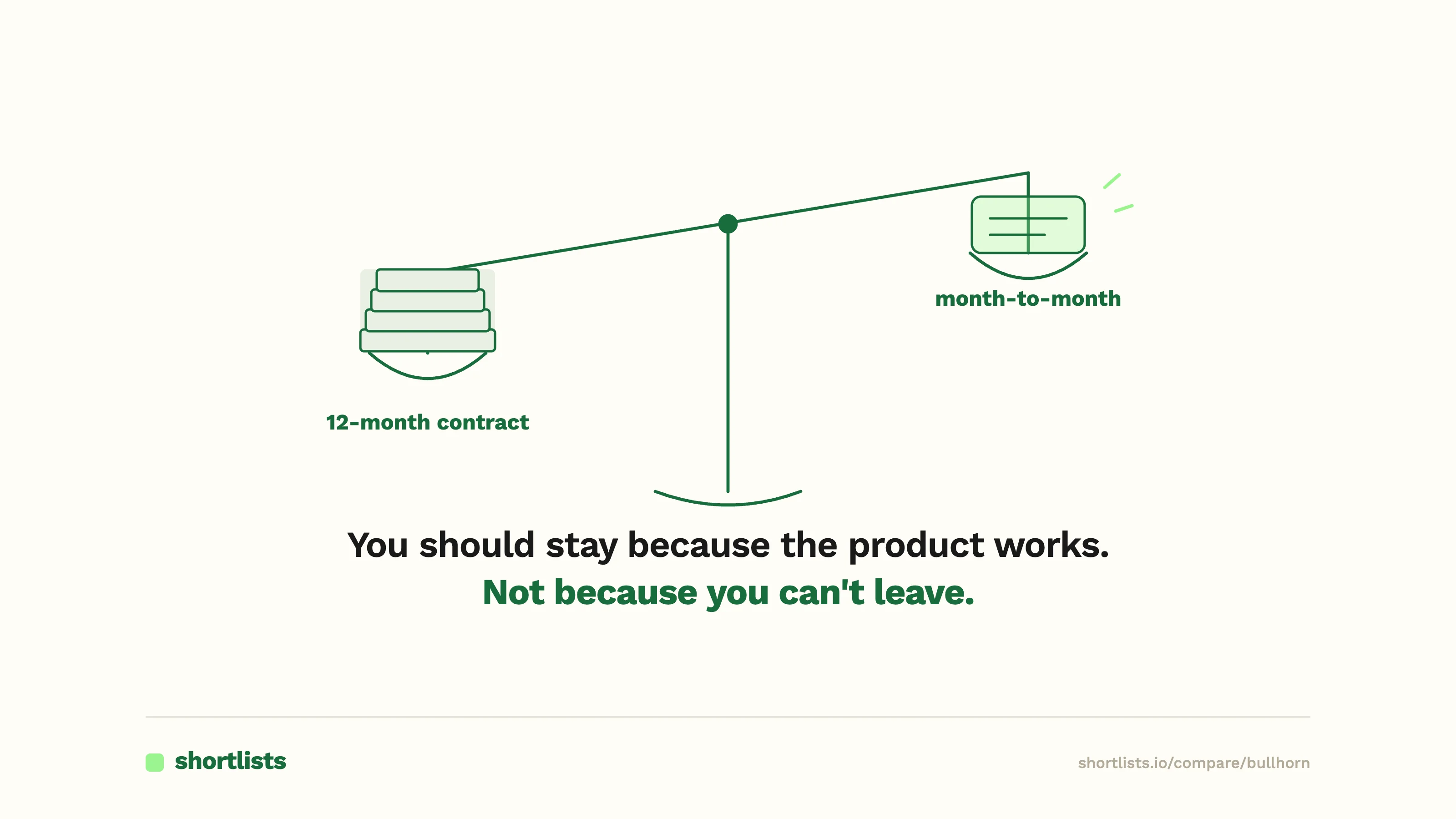
- Flexible month-to-month contracts and straightforward migration support reduce the risk of switching CRM.
- UK agencies should prioritise GDPR compliance, EU or UK data hosting and clear data export policies.
- Business development capabilities, such as identifying hiring signals before roles are advertised, can provide a competitive advantage beyond standard CRM functionality.
- The best recruitment CRM is one that fits your agency's size, workflow and growth plans, rather than offering enterprise features you rarely use.
What a 3-to-10 seat UK agency is actually asking
Most agencies searching for a Bullhorn alternative are not looking for a feature-equivalent switch. They are looking to stop paying for things they do not use.
Bullhorn was built for large staffing groups: 50, 100, 200-plus recruiters, enterprise compliance, multi-team administration, regional reporting. It does that job well. The 3-to-10 seat UK agency gets a reduced version of that product at a price that does not reflect the reduction.
Three triggers send agencies looking.
The pricing. Bullhorn does not publish its pricing publicly. Third-party estimates from independent pricing trackers put the full CRM plus ATS setup at around $199 per user a month for a mid-tier configuration, within a reported range of $99 to $315 depending on tier, add-ons and negotiation. (Source: ITQlick and Herohunt.ai pricing analysis, June 2026.) For a five-person desk, that is between $5,940 and $18,900 a year before AI or enrichment are added.
The contract structure. Bullhorn uses annual contracts with auto-renewal and, according to users on Capterra and G2, a 90-day cancellation notice window. Miss the window and you are locked in for another year. That structure suits a 200-person firm with stable headcount. It is a serious commitment for a five-person desk.
The add-on tax. AI notetaking, contact enrichment, outreach tools and advanced analytics are typically sold as separate modules. An agency building a complete day-to-day recruiting stack on Bullhorn is assembling it from several products, not one.
None of these are criticisms of Bullhorn as a product. They are statements about fit.
Five things to look for in a Bullhorn alternative
Not every tool that markets itself as a Bullhorn alternative is actually built for a 3-to-10 seat UK agency. Here is what to evaluate, regardless of which tools end up on your shortlist.
1. Price transparency
Does the tool publish its pricing publicly, without a demo required to see a number? For a small agency, the cost matters, but so does knowing the cost before you invest time in an evaluation. A tool that withholds pricing until a sales call is a tool that prices by negotiation, and negotiation favors the seller.
Look for: a published price, in a currency relevant to your agency, that you can compare to your current stack before you book a call.
2. All-in pricing versus add-ons
List every tool your desk currently uses: CRM, notetaker, enrichment, outreach, client reporting, business development (BD) signals. Then ask each candidate tool: which of these is included in the base price, and which requires a separate purchase or a higher tier?
A tool with a lower headline price and five paid add-ons can cost more in practice than a higher-headline tool that includes everything. The relevant comparison is the all-in monthly cost per recruiter, not the number at the top of the pricing page.
3. Contract and exit terms
What is the minimum commitment? What is the cancellation process? What does it cost to get your data out if you need to leave?
Annual contracts with auto-renewal are the standard in enterprise software. For a 3-to-10 seat agency, the relevant question is: if this tool stops working for you in month eight, what is the cost of leaving? If the answer is nine months of subscription plus a data export fee, that is worth knowing before you sign.
Look for: month-to-month billing, a clear data export process that does not require a paid migration out, and a cancellation process that does not require 90 days notice.
4. UK compliance built in, not bolted on
UK GDPR applies to every piece of candidate personal data you process. That means consent tracking, right-to-erasure workflows, and knowing exactly where your data is hosted. EU or UK data hosting is the practical standard for UK agencies. US-hosted tools without a data-transfer agreement create a compliance risk you do not need.
Ask any tool you evaluate: where is my data hosted? Is the product SOC 2 certified? Can I delete a candidate record and have it gone within 30 days?
5. Migration support at no additional cost
Switching CRMs is the most common reason agencies stay on Bullhorn past the point where they are satisfied with the product. The real question is what migration actually costs and how long it takes.
With enterprise-adjacent tools, migration is typically handled by a third-party partner, priced separately, and takes four to eight weeks. Some recruiting CRMs now include migration as part of the product. That is the standard to ask about.
Two things that make the evaluation harder than it looks
The overlap period. If you are eight months into a 12-month Bullhorn contract, you cannot simply switch. You need a plan: either a bridge rate on your new tool that keeps the overlap manageable, or a clear strategy for negotiating an early exit. Any alternative worth considering should have an answer to this before you sign up.
The business development gap. Most recruiting CRMs, Bullhorn included, are built around reactive workflows. The job lands, you search the database, you fill the role. Very few include tools for proactive business development: monitoring funding rounds, tracking VP hires, spotting senior leavers in your niche before a role is posted.
That gap is expensive. Of 220 UK agency founders interviewed before building Shortlists, 217 had no repeatable BD system, and the three who did earned 2 to 3 times more placement fees than the rest. (Source: Jack Nicoll, 220 UK agency founder interviews, 2025.) Any Bullhorn alternative worth evaluating should have an answer to this, not just a better CRM interface.
When Bullhorn is still the right answer
Honesty is useful here, because it is easy to overstate the case for switching.
Bullhorn earns its place at a specific scale and configuration. If you run a 20-plus desk staffing group, need enterprise compliance and multi-team administration, and have IT support to manage the tool, Bullhorn is strong at that job. The product is genuinely well-built for that market.
For a 3-to-10 seat UK agency, the honest assessment is that you are paying for the capabilities of a much larger firm. If your current workflow is deeply embedded in Bullhorn, the switching cost is real: migration, retraining and the overlap period all add up. Factor those in before making a decision purely on price.
The question to ask yourself is not "is Bullhorn expensive?" It is "am I using enough of it to justify the cost?" If the answer is yes, stay. If the answer is no, the evaluation is worth doing.
How Shortlists compares against these five criteria
Shortlists is a recruiting CRM built for 3-to-10 seat UK agencies. Against the five criteria above:
Price transparency: pricing is published at shortlists.io/pricing before you speak to anyone. $120 per user a month, no annual contract.
All-in pricing: CRM, ATS, interview notetaker, client portal, BD Radar, outreach and 40 enrichment credits per user per month. One price, everything included. No add-on tax.
Contract terms: month-to-month. No annual contract. Cancel at any time. Your data is always exportable.
UK compliance: SOC 2 certified, GDPR-compliant, EU-hosted in Stockholm. Candidate records include consent tracking and right-to-erasure workflows.
Migration: Free, fully managed migration, with your data live within 48 hours. Most agencies are live within 48 hours of sending their export. For agencies currently mid-contract with Bullhorn, there is a bridge rate available to manage the overlap period. Ask about it on a demo call.
See the full feature-by-feature comparison at shortlists.io/compare/shortlists-vs-bullhorn.
FAQ
What is the best Bullhorn alternative for a small UK recruiting agency?
For a 3-to-10 seat UK agency, look for a recruiting CRM that publishes its pricing publicly, includes AI and enrichment in the base price, runs month-to-month rather than on an annual contract, and supports UK GDPR compliance with EU or UK-hosted data. The best alternative is the one that covers your actual workflow at a cost that reflects your size, not the enterprise overhead of a 200-person staffing group.
Is Bullhorn too expensive for a small agency?
The pricing is only part of the issue. The full cost of running Bullhorn includes the base subscription, add-ons for AI and enrichment, and the overhead of managing a tool built for a much larger operation. Third-party estimates put the full setup at around $199 per user a month for a mid-tier configuration. (Source: ITQlick, June 2026.) Whether that is too expensive depends on your desk size and how much of the product you actually use.
Can I switch from Bullhorn mid-contract?
Yes, with planning. Bullhorn uses annual contracts with, according to users on Capterra and G2, a 90-day cancellation notice window. Work out when your notice window opens, and look for an alternative that offers a bridge rate for the overlap period so you are not paying two full subscriptions at once. The migration itself can be handled overnight; the contract management is the part that needs planning.
How long does it take to migrate from Bullhorn?
With enterprise-adjacent tools, migration is typically handled by a third-party partner and takes four to eight weeks. Free, fully managed migration, with your data live within 48 hours.
What Bullhorn features will I lose if I switch to a smaller CRM?
Mostly the enterprise features: heavy compliance reporting, multi-team administration, deep custom configuration and large-scale workflow automation. The day-to-day recruiting work, CRM, pipeline, notetaking, enrichment, outreach and client reporting, is covered by tools built for small agencies. If you use 20% of Bullhorn's feature set, the 80% you leave behind is complexity you were managing rather than value you were capturing.
Next steps
If you are running a 3-to-10 seat UK agency on Bullhorn and the price-to-value balance no longer feels right, the evaluation is worth doing with real numbers rather than assumptions. Not to commit to a switch, but to understand what the comparison actually looks like for your desk size.
Shortlists is built for 3-to-10 seat UK agencies. No demo required to see the pricing.
- See the full Shortlists vs Bullhorn comparison
- View pricing
- Mid-contract? Book a migration call and we will map out the overlap.
- See how BD Radar fills the business development gap most CRMs leave open.